How to Turn an Idea Into a Product: Guide for First-Time Founders
Turning a raw idea into a working SaaS product is one of the most practical challenges a first-time founder faces, especially without a technical background. The process involves more than writing code; it requires validating the concept, prototyping quickly, and making smart decisions at every stage. Tools available today, including the best no-code SaaS builder options on the market, have made this path far more accessible than it was just a few years ago.
Founders no longer have to figure this out alone or stall on decisions they were never trained to make. Getting the right support early can mean the difference between a product that ships and one that stays stuck in planning. Polsia is a web app development company that guides founders from initial concept through to a working product that real users can test and pay for.
Table of Contents
- Why So Many Product Ideas Never Get Built
- Why Building the Product Is Only Half the Challenge
- How to Turn an Idea Into a Product
- The Hidden Costs of Turning an Idea Into a Product
- What First-Time Founders Need to Succeed
- How Polsia Helps Founders Turn Ideas Into Real Businesses
- Start or Grow Your Existing Business with Polsia Today
Summary
- Roughly 66% of new product development projects never reach the market, according to StudioRed's 2024 research. The failure point is rarely the idea itself. Most concepts die in the gap between intention and execution, where founders wait for the right team, budget, or technical knowledge before taking any action.
- Validation is the step most founders skip, and it is the most expensive mistake in early-stage product development. Approximately 95% of new products fail after launch, and 42% of startups fail because there is no market need for what they built. Both of those outcomes trace back to the same root cause: testing the market after building, rather than before.
- Defining an MVP with discipline matters more than building quickly. Founders consistently add features because building feels productive, but the first version of a product should answer one question clearly rather than ten questions partially. Treating the MVP as a hypothesis rather than a finished product is what separates teams that learn fast from teams that iterate in the wrong direction for months.
- A formal product development process, meaning a defined sequence of validate, build, launch, and improve, produces measurably better outcomes. Companies that follow a structured development process achieve 30% higher success rates than those that build without a defined sequence, according to StudioRed's research. The discipline of following steps in order is what prevents invisible debt from accumulating and surfacing after launch.
- Shipping a product is only the entry ticket. Only 40% of developed products make it to market, and of those, only 60% generate any revenue. The gap between launching a product and building a sustainable business is where most early-stage founders underestimate the work that remains, particularly in customer acquisition, retention, and operational execution, which are entirely separate disciplines from product development.
- Polsia, a web app development company, addresses this by extending support beyond the build stage to include marketing, customer engagement, and operational execution, providing a solo founder with functional coverage across the full product lifecycle without requiring a standing team.
Why So Many Product Ideas Never Get Built
Most product ideas fail silently because people don't take action, not because the ideas are flawed. The space between thinking of an idea and releasing a product is where ambition meets obstacles, and obstacles usually win.
"The graveyard of innovation is filled not with bad ideas, but with good ideas that were never acted on." — Product Development Insight
🚨 Warning: The biggest killer of product ideas isn't competition, budget, or timing. It's the silent gap between ideation and execution that most builders never bridge.
💡 Tip: When a product idea sparks, treat it as time-sensitive. Every day without action erodes momentum and compounds obstacles.

Why do most product ideas stall before anything gets built?
The failure point is rarely the idea itself. Aspiring founders get stuck in a loop of preparation, waiting for the right team, budget, and technical knowledge before taking action. According to StudioRed's 2024 product development research, up to 66% of new product development projects never reach the market. That number reflects not bad ideas, but the gap between intention and execution that most people never close.
The belief that you need a full team before you can build anything is one of the most expensive misconceptions among founders. Aspiring founders treat hiring as a requirement, assuming that without a developer, a designer, and a marketer lined up, they cannot start. This thinking hands the decision to launch to circumstances outside their control. The bottleneck was never headcount. It was the decision to begin.
How does fear disguise itself as a reason not to launch?
Fear disguises itself as thoroughness, more research, and waiting for the right moment. Testing an idea in the real market means confronting the possibility that it might not work. Most people won't take that risk until the cost of inaction finally outweighs the cost of failure. Most ideas never reach that tipping point.
The founders who do move forward often discover a different problem. According to LinkedIn Pulse, 42% of startups fail because there is no market need for their product. This is not a building problem; it is a validation problem. Founders who spend months constructing a product before confirming that real people want it defer the most important question until the most expensive possible moment.
What has changed about how a single founder can build and ship a product?
This is where the old model breaks down. The idea that turning an idea into a product requires a standing team, a development budget, and months of runway before testing anything is no longer true. A web app development company like Polsia operates on a different principle: a single founder can move from concept to a working product without first assembling a team. The stages that once required multiple specialists—roadmapping, building, launching, selling—are now achievable by one person from start to finish with the right system.
Getting the product built is only the beginning of the story.
Related Reading
- How To Start A Software Company
- How to Automate My Business
- How To Find A Cofounder
- How To Validate A Startup Idea
- Startup Product Development
- How To Create A Digital Product
- How To Start An Ai Company
- How To Start A Saas Business
Why Building the Product Is Only Half the Challenge
Building a product is a proof of concept. Shipping it is a declaration of intent. But what happens after launch is where most founders discover the real weight of what they've started.
"Only 40% of developed products make it to market — and of those, only 60% will generate any revenue." — StudioRed
🎯 Key Point: The hardest part of building a product isn't the build; it's everything that comes after you ship.

A well-built product in an underserved market does not automatically attract customers. Distribution is a separate problem from creation. According to StudioRed, only 40% of developed products make it to market, and of those, only 60% will generate any revenue. Being found is the challenge, not being built.
⚠️ Warning: Founders who treat launch as the finish line are most likely to fall into the revenue gap: where a strong product sits invisible in a crowded market.
🔑 Takeaway: Product quality and product distribution are two entirely different skill sets. Mastering one does not guarantee success in the other.
Why does customer acquisition demand a completely different skill set?
Getting new customers requires a different set of skills than building a product. Founders who spent weeks on wireframes and user flows must suddenly learn conversion funnels, ad targeting, content strategy, and sales copy. These are separate areas of expertise, each with its own learning curve. You shift from building to selling, and those two mindsets rarely align naturally in the same person.
Most founders stick with what they know best. Developers keep making changes to the product instead of talking to customers. Marketers keep running ads without fixing the sign-up process that drives users away. This delays the one thing that matters: revenue. A web app development company like Polsia changes the equation by extending into marketing, customer engagement, and operational execution, giving one person the functional reach of a full team without the overhead of building one.
What do most founders underestimate about the distance from launch to sustainability?
The product you spent six months building is only the entry ticket. The business itself—the acquisition loop, retention strategy, operational rhythm—is what you must build next. Unlike product development, business operations never stop requiring attention. Support requests arrive. Infrastructure needs maintenance. Each new customer brings compounding complexity that most founders underestimate.
Many products fail not because the idea was flawed, but because founders underestimate the distance between "launched" and "sustainable." A working product is a foundation, not a business. Turning that foundation into consistent revenue requires a second act that most early-stage founders never fully plan for.
The more useful question is what a repeatable path from idea to revenue looks like, and the answer is more structured than most people expect.
How to Turn an Idea Into a Product
The path from idea to product is organized in a surprisingly clear way. Successful founders follow a sequence that reduces wasted effort at every stage, starting with the problem and ending with a product that earns its place in someone's workflow.
"The best products don't start with a solution — they start with a problem worth solving." — Product Development Principle
💡 Tip: Before writing a single line of code or sketching a single screen, validate the problem first — this single step separates thriving products from abandoned side projects.
⚠️ Warning: Skipping the problem-first sequence is the most common mistake early founders make — jumping straight to building means you risk investing weeks or months into something nobody needs.
Polsia aligns each startup phase with automated intelligence to ensure founders stay focused on high-impact goals:
- Problem Discovery: Focuses on identifying a real pain point with the goal of confirming that the problem is worth solving.
- Idea Validation: Focuses on testing core assumptions early to reduce the risk of wasted effort and misdirection.
- Product Building: Focuses on building the core solution to earn a meaningful place in your customers' daily workflows.
- Launch & Iterate: Focuses on shipping the product to gather essential feedback for refining the experience for real users.
Validate Before You Build Anything
The failure point is almost always the same: a founder falls in love with a solution before confirming the problem is real. Skipping validation doesn't save time; it moves the problem to a later time, when the cost of being wrong is much higher. Before writing code or designing screens, identify who experiences the problem, how often, and what they currently do about it. Those conversations will tell you more than months of internal planning.
According to StudioRed's product development research, approximately 95% of new products fail after launch. This reflects how many products reach the market without confirming that real demand exists. Validation separates products people tolerate from products people want.
What is the shortest path to something real?
Once demand is confirmed, define your MVP with discipline: the smallest version that delivers genuine value now, not the product you want eventually. Founders often add features because building feels productive, but more features rarely mean more value. Your first version should answer one question clearly, not ten partially.
How does building without a team shift the bottleneck?
Most solo founders build alone and launch only when the product feels "ready," delaying real user feedback for months. A web app development company like Polsia helps solo founders move from a validated concept to a working product without needing a developer, a product manager, or an extended timeline. The bottleneck shifts from "do I have resources to build this?" to "do I have clarity to start."
Launch, then learn
Research from StudioRed shows that companies following a formal product development process see 30% higher success rates. "Formal" means intentional: a clear sequence of validate, build, launch, and improve, repeated with discipline. Founders who skip steps don't move faster; they accumulate invisible debt that surfaces after launch, when fixing wrong assumptions costs far more than validating them upfront.
What does it mean to treat your first version as a hypothesis?
After launch, the product belongs to the people using it. Their behavior, drop-off points, and repeated requests signal what to build next. Treat the first version as a hypothesis, not a finished argument. Founders who build products customers genuinely want stay curious after launch, not just before it.
What comes next changes everything about how you think about starting.
Related Reading
- Softr Alternatives
- Ai Prototyping
- Replit Alternatives
- Best Ai Tools For Startups
- Bubble.io Alternatives
- Lovable Ai Alternatives
- Mvp Tools
- Easiest Way To Build A Web App
- No-Code AI Tools
- Saas Mvp Development
- Bolt Alternatives
- Best App Creators
The Hidden Costs of Turning an Idea Into a Product
Many people who want to start a business think the hardest part is coming up with a great idea. In reality, the biggest challenge is turning that idea into a real product and business when you don't have a lot of money or resources.
"The gap between a great idea and a real product is where most entrepreneurial dreams quietly die — not from lack of vision, but from lack of resources."
⚠️ Warning: Don't underestimate the hidden costs of product development — from prototyping and testing to marketing and scaling, the expenses add up fast.
💡 Tip: Before investing time or money, map out every stage of your product journey so you can identify resource gaps early and plan accordingly.
Polsia mitigates the hidden financial and operational costs associated with each stage of the startup lifecycle:
- Prototyping: Replaces the need for costly materials, expensive prototyping tools, and lengthy iteration cycles by streamlining the initial build phase.
- Development: Reduces the heavy burn rate associated with hiring specialized tech talent and managing recurring software licensing fees.
- Testing & Validation: Simplifies the often-underestimated burden of user research, quality assurance, and product pivots through automated feedback loops.
- Launch & Marketing: Optimizes your spend on ads, branding, and distribution, ensuring you gain critical traction without the traditional overhead costs.
🔑 Takeaway: The real barrier to entrepreneurship isn't a lack of ideas — it's the financial and operational reality of bringing those ideas to life without sufficient capital or support.

Why do development and design costs catch founders off guard?
Hiring developers is often the first major challenge. Unless founders have technical skills themselves, they need software engineers to build, test, and maintain their product. Development can quickly become one of the biggest startup expenses, depending on project complexity.
Design is another cost that people often miss. A product may work perfectly, but if users find it confusing or hard to use, fewer people will adopt it. Professional UI/UX design, branding, and product design work add high costs before a single customer signs up.
How much do marketing and customer support really cost?
Marketing brings high costs. Building a product does not automatically make people want to buy it. Founders often need to spend money on advertising, content creation, social media management, email marketing, SEO, and other customer acquisition channels. An analysis of hundreds of failed startups by CB Insights found that 43% cited poor product-market fit as a key reason for failure, highlighting how difficult it can be to build something customers truly want.
Customer support creates ongoing operational demands. Once users adopt a product, they expect timely assistance and issue resolution. What starts as a side project quickly requires dedicated support time.
What ongoing infrastructure and time costs do founders underestimate?
Infrastructure and operations add another layer of cost. Hosting, databases, analytics tools, payment processing, security services, software subscriptions, monitoring systems, and maintenance expenses continue long after launch. These recurring costs are difficult for new founders to predict.
Perhaps the most underestimated cost is time. Solo founders become marketers, customer support representatives, operators, project managers, and strategists simultaneously. Research from the U.S. Small Business Administration shows that self-employed individuals often spend significant time managing business operations beyond their primary work, including administration, client acquisition, financial management, and planning.
Why do so many promising ideas never become products?
These resource constraints explain why so many promising ideas never become products. Many aspiring founders believe they need developers, designers, marketers, support teams, and substantial capital before launching. When the perceived cost becomes too high, ideas remain stuck in the planning stage.
The challenge for modern founders is handling development, marketing, customer acquisition, and operations without a traditional startup budget.
What First-Time Founders Need to Succeed
Turning an idea into a successful business requires managing marketing, customer acquisition, operations, planning, and execution simultaneously.
"The ability to juggle multiple business functions simultaneously is one of the defining challenges that separates founders who scale from those who stall." — Startup Research Insights
🎯 Key Point: First-time founders aren't building a product; they're running a multi-functional operation from day one.

The real challenge is that most first-time founders don't have expertise in all these areas. They may know how to build a product but struggle with marketing. Others understand customers but lack technical skills. Hiring specialists is often too expensive for early-stage budgets, forcing many founders to do multiple jobs at once.
Polsia bridges the common operational gaps that founders face by balancing individual strengths with automated support:
- Product building: Addresses the gap in Marketing & growth by automating user acquisition and promotional campaigns.
- Customer insight: Fills the void in Technical execution by managing the actual development and implementation of requested features.
- Technical skills: Counters the lack of Sales & customer acquisition expertise through automated growth systems.
- Operations: Supports the founder where they may lack Strategic planning by providing AI-driven guidance on business direction and KPIs.💡 Tip: Identify your single biggest skill gap early — it's the area most likely to become a critical bottleneck as you scale.
⚠️ Warning: Trying to do everything alone without acknowledging your gaps is one of the most common reasons early-stage startups fail before finding traction.
How do founders build a product that solves a real problem?
Founders must build a product that solves a real customer problem by validating demand, clearly articulating its value, and iterating based on user feedback. Research shows that understanding customer needs and maintaining alignment between strategy and execution are critical for long-term survival.
Why does marketing matter for early-stage startups?
Marketing is equally important. Even the best products struggle without awareness. Founders need reliable ways to create awareness, communicate value, and generate demand through content marketing, advertising, social media, partnerships, and community building.
Customer acquisition is essential for sustainability. Successful founders identify acquisition channels, optimize conversion rates, and build repeatable growth systems rather than relying on occasional traffic or word-of-mouth.
How do operations and planning shape long-term success?
Operations play a major role in long-term success. As a business grows, founders must manage customer support, infrastructure, finances, workflows, and day-to-day execution. Effective sales systems, customer care processes, financial planning, and sustainable operations are critical factors for startup success.
Strategic planning helps founders prioritize limited resources. Early-stage startups lack sufficient time, money, and personnel to pursue every opportunity, forcing founders to decide which features to build, which markets to target, and where to invest for greatest impact.
Why is consistent execution so difficult for first-time founders?
Most importantly, founders must work consistently. Progress comes from repeatedly testing ideas, solving problems, learning what customers want, and adapting as circumstances shift. Research shows that first-time founders succeed far less often than repeat entrepreneurs—around 18% in some studies—demonstrating how challenging it is to build a business for the first time.
How Polsia Helps Founders Turn Ideas Into Real Businesses
For many people who want to start their own business, the biggest problem isn't coming up with an idea—it's actually doing it. Building a successful business the traditional way requires technical skills, the ability to develop products, knowledge about marketing, experience running operations, and significant capital. Many good ideas never progress past the planning stage.
"The biggest barrier to entrepreneurship isn't the idea — it's the gap between planning and execution that stops most founders before they ever start."
⚠️ Warning: Most aspiring founders don't fail because their idea is bad — they fail because the traditional startup model demands too many skills, too much capital, and too large a team before anything is built.
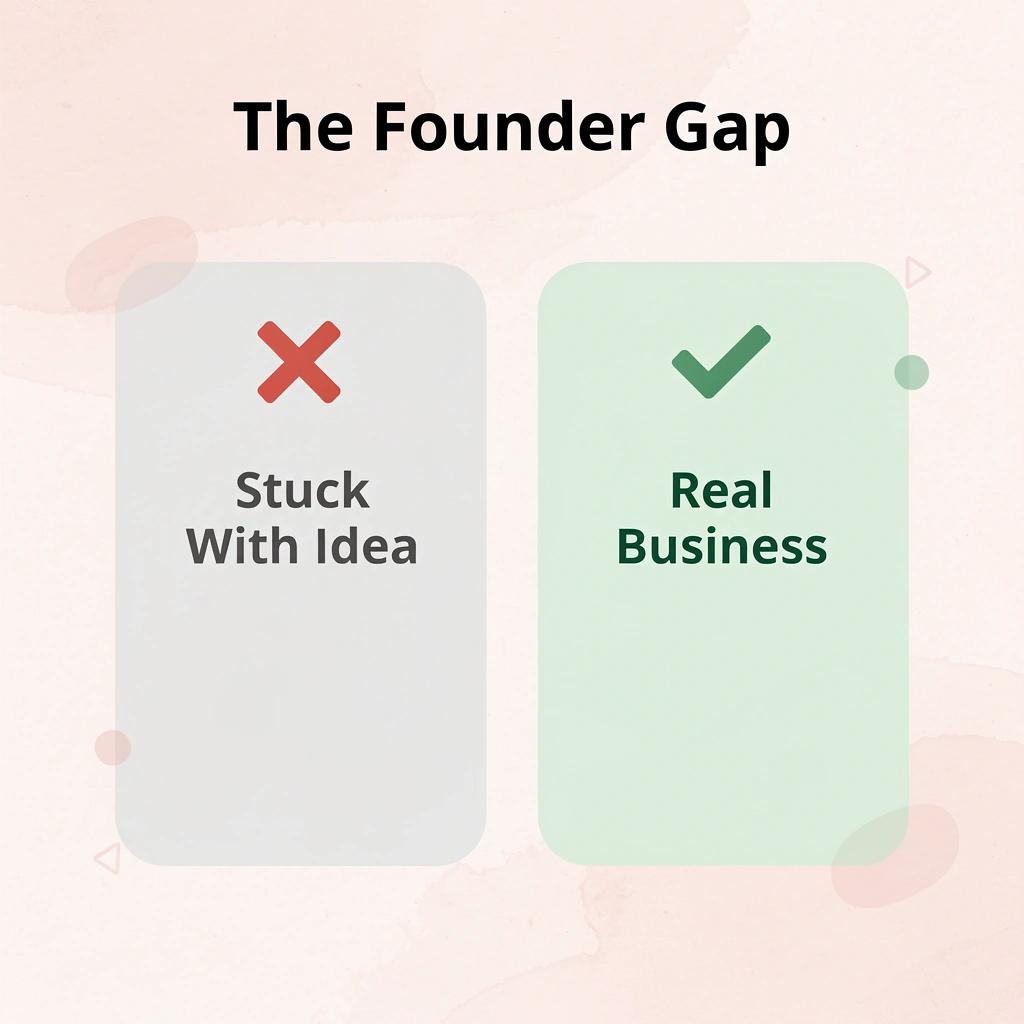
Polsia is an independent AI co-founder made to help founders move from idea to product and from product to business without putting together a traditional startup team. Instead of needing separate developers, marketers, operators, and technical co-founders, Polsia handles many of the tasks involved in building and growing an online business.
Polsia fundamentally shifts the startup model by automating the roles and capital requirements typically needed to get a business off the ground:
- Engineering: Moves from hiring developers to letting Polsia build your product directly.
- Marketing: Shifts from manual hiring to having Polsia execute your marketing tasks automatically.
- Operations: Replaces the need for a dedicated operator with Polsia’s built-in management of day-to-day operations.
- Leadership: Substitutes the search for a technical co-founder with Polsia acting as your strategic co-founder.
- Capital: Eliminates the barrier of significant upfront funding by allowing you to launch without a full team.
🎯 Key Point: Polsia replaces the need for a full founding team — giving solo founders access to the same capabilities as a well-resourced startup, without the overhead.
💡 Tip: If you have a strong business idea but lack the technical or operational skills to execute it, Polsia is designed specifically for founders in your position.
How does Polsia support planning and product development?
The platform supports business planning and execution from the earliest stages. Polsia transforms ideas into actionable business plans and launch strategies, whether you're testing a new opportunity or refining an existing concept.
When it's time to build, Polsia handles full-stack product development, helping founders create MVPs, software products, web applications, and online businesses. Entrepreneurs can move from concept to launch faster without coding experience or a technical background.
How does Polsia help with marketing and customer acquisition?
After launch, Polsia addresses a critical challenge: customer acquisition. The platform supports automated marketing across cold email, Meta ads, and social media, helping businesses generate awareness and attract customers without a dedicated marketing team.
What ongoing operational support does Polsia provide?
As the business grows, Polsia provides support through customer communication, inbox management, infrastructure setup, and operational management. Founders can streamline their operations by consolidating dozens of disconnected tools into one platform.
Because Polsia operates continuously, founders gain 24/7 execution support for planning, development, marketing, and operations. This proves particularly valuable for first-time founders who lack the time, resources, or expertise to manage every aspect on their own.
Who is Polsia built for?
Polsia is built for people getting started. You don't need coding skills, a technical co-founder, startup experience, or a large team. Founders can focus on developing their ideas while Polsia handles the work required to bring them to life.
Start or Grow Your Existing Business with Polsia Today
The decision to start is the only thing standing between your idea and a real product. Most founders wait for the right team, the right budget, or the right moment—none of which are requirements anymore.
"The biggest barrier to building a company isn't talent, funding, or timing — it's the decision to begin." — Startup Founder Insight
🎯 Key Point: Waiting for perfect conditions is the #1 reason great ideas never become real products. The only requirement is deciding to start.

Whether checking if your first idea will work or growing what you've already built, a web app development company gives you an AI co-founder that can plan, build, market, and run your company from a single starting point. You don't need a developer, marketer, or sales team. You just need to decide to start.
💡 Tip: Your AI co-founder handles the heavy lifting — from product planning to marketing execution — so you can focus on what matters most: your vision.
Polsia replaces traditional team-based business operations with an autonomous, AI-driven system that handles end-to-end execution:
- Developer: Replaced by autonomous AI code agents that write, ship, and maintain software features.
- Marketer: Replaced by AI-driven execution that manages ad campaigns, social media posting, and cold outreach.
- Sales Team: Replaced by automated growth systems that handle prospect research, lead engagement, and customer support.
- Business Planner: Replaced by an "AI co-founder" (orchestrator agent) that proactively drafts business strategies, sets KPIs, and updates operations.
✅ Best Practice: Start with one idea, let your AI co-founder validate and build it, then scale from a single starting point — no large team required.
Related Reading
- Glide Vs Bubble
- Bolt Vs Replit
- Bubble.io Vs Webflow
- Bubble Vs Lovable
- Lovable Ai Vs Replit
- Glide Alternatives
- Base44 Vs Lovable Ai
- Replit Vs Base44